Planning the day
How long should I budget for the visit?
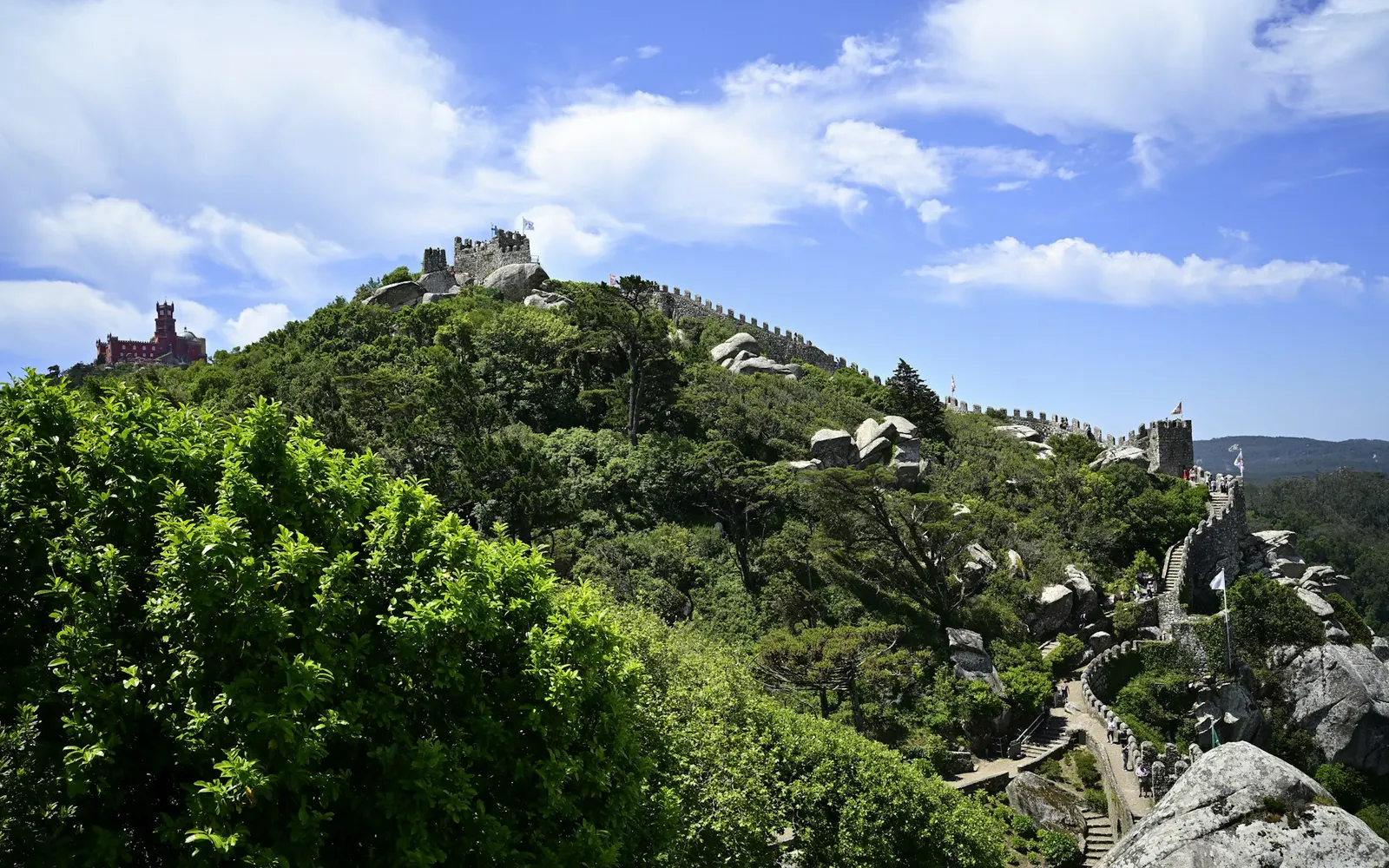
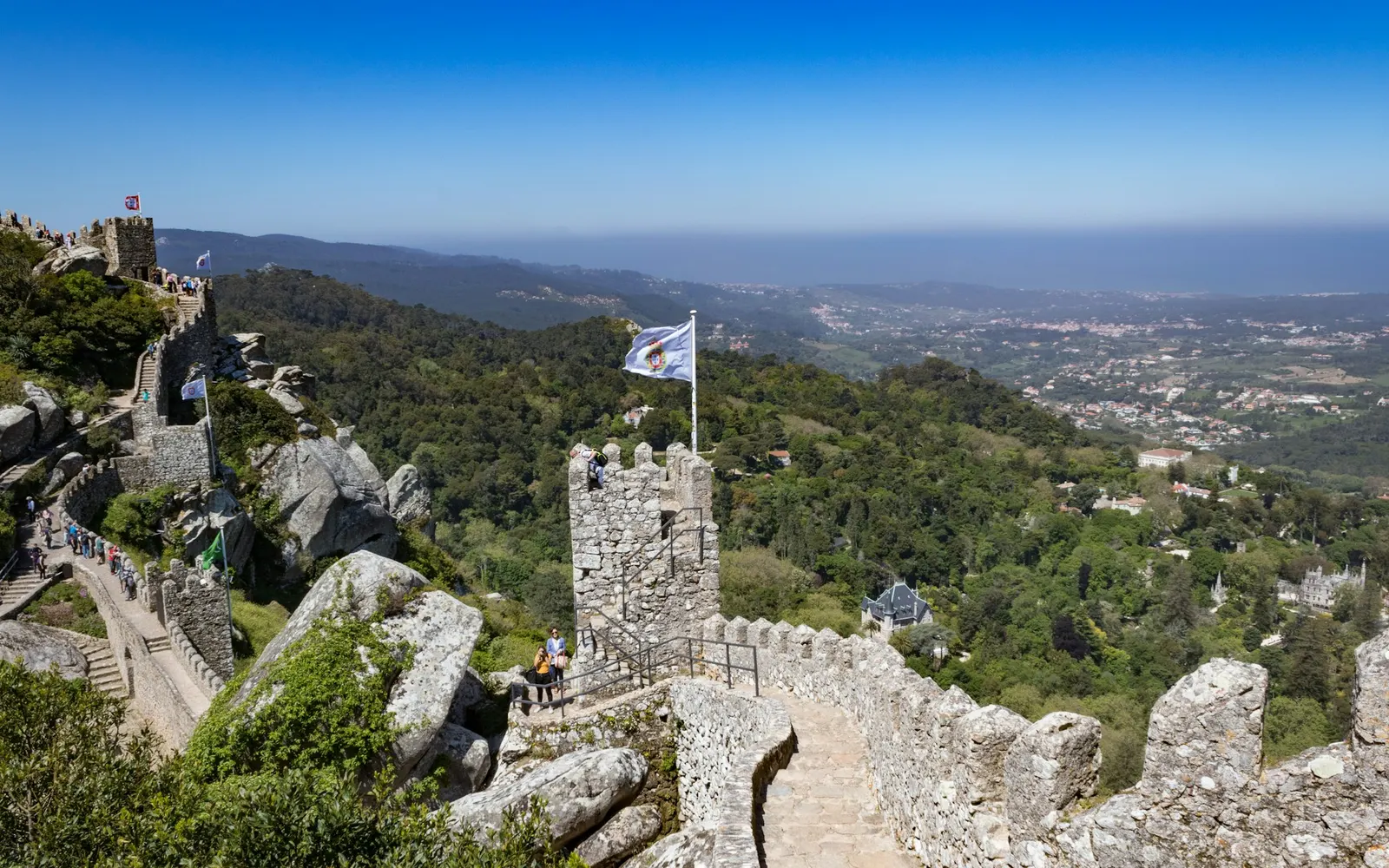
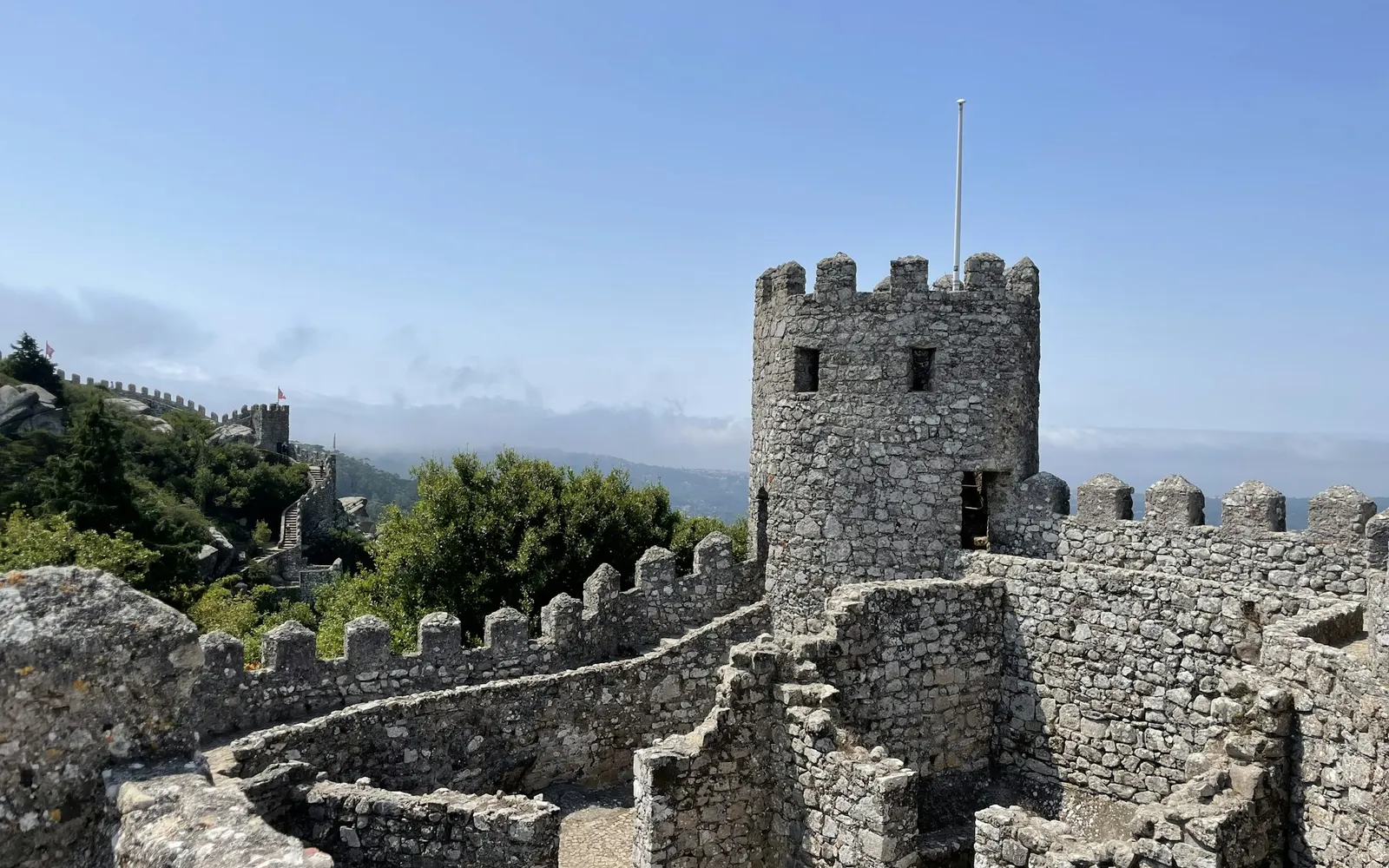
Plan for 1.5 to 2 hours at the Castle of the Moors from gate-in to gate-out. That covers the 5 to 10 minute walk from the entrance up to the ramparts, 60 to 90 minutes for the full circuit along the 450-metre wall line including the Royal Tower and a stop at the chapel, and a buffer for photography over Sintra, Pena Palace and the Atlantic. Visitors who read every interpretation panel and explore the archaeological foundations of the medieval village, the 18-metre subterranean cistern and the funerary tombs uncovered from 1979 can stretch to 2.5 hours. Those with less time can walk a compressed rampart route in 45 minutes, though they will miss most of the secondary sections and the quieter northern towers. The Moorish Castle absorbs a flexible schedule well, so leave a margin rather than racing the last-entry cutoff at the gate.
Should I do the Moorish Castle in the morning or the afternoon?
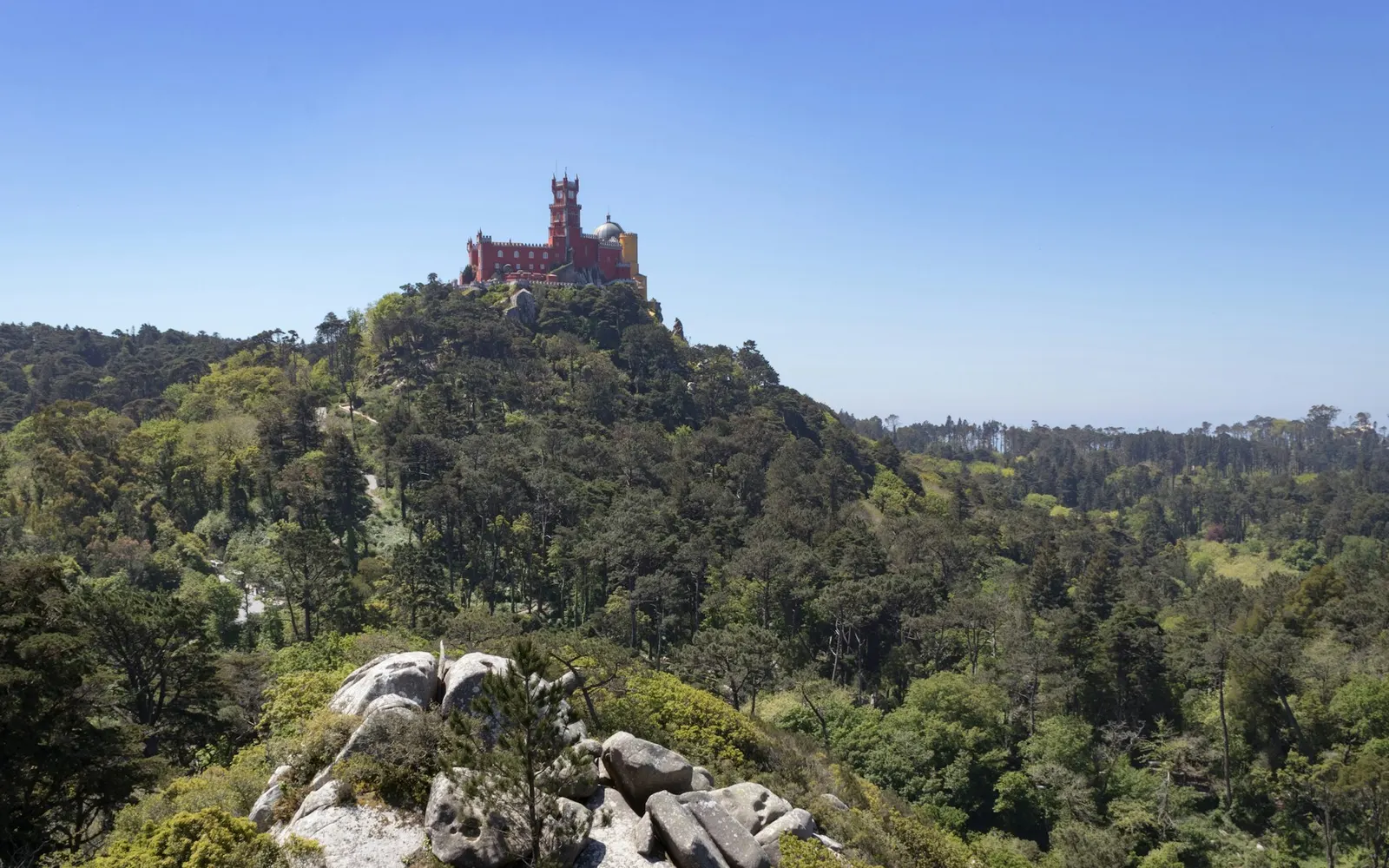
If you are also visiting Pena Palace the same day, as most international visitors are, take Pena first thing in the morning and the Castle of the Moors in the early afternoon. Pena's interior runs on a timed-entry system that rewards early arrival, while the Moorish Castle is an open-air site that absorbs schedule slippage. The light on Pena from the Royal Tower viewpoint is strongest in the late morning, so an early-afternoon rampart walk catches the tail of that good light across Sintra town and the Atlantic. The 450-metre circuit takes 60 to 90 minutes, so an early-afternoon start clears the last-entry cutoff with room to spare. Visitors doing only the castle can arrive at any point before the cutoff, though mid-morning gives the clearest air over the Serra before the coastal mist that often builds later in the day rolls in off the Atlantic.
Is sunset a good time to visit?
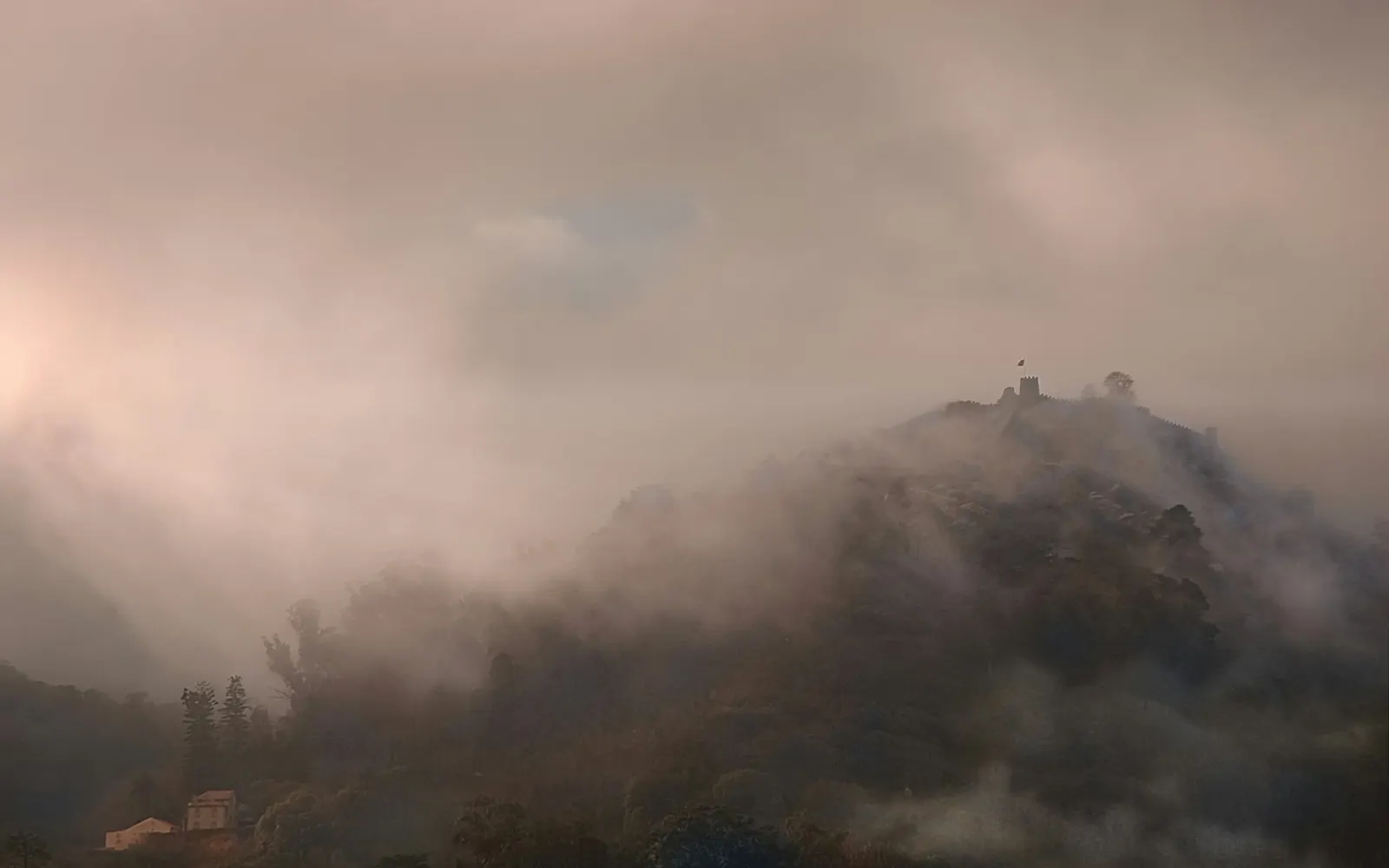
Sunset visits to the Castle of the Moors are impractical because the operator closes the gates roughly an hour after the published closing time, which in winter pushes the last viable visit to mid-afternoon and in summer means the site is emptying as the light begins to turn. Sintra also has a strong tendency for late-afternoon coastal mist to roll in off the Atlantic as the air cools, which can swallow the Royal Tower panorama over the town and Pena Palace. Photographers chasing golden hour are better served by Pena's terraces, where the late light on the polychrome facade is excellent and the timing sits inside operator hours. For the clearest views from the Moorish Castle ramparts, arrive in the morning, when the air over the Serra is at its most transparent and the granite walls catch a cleaner, cooler light along the ridge.
What is the best time of year to visit?
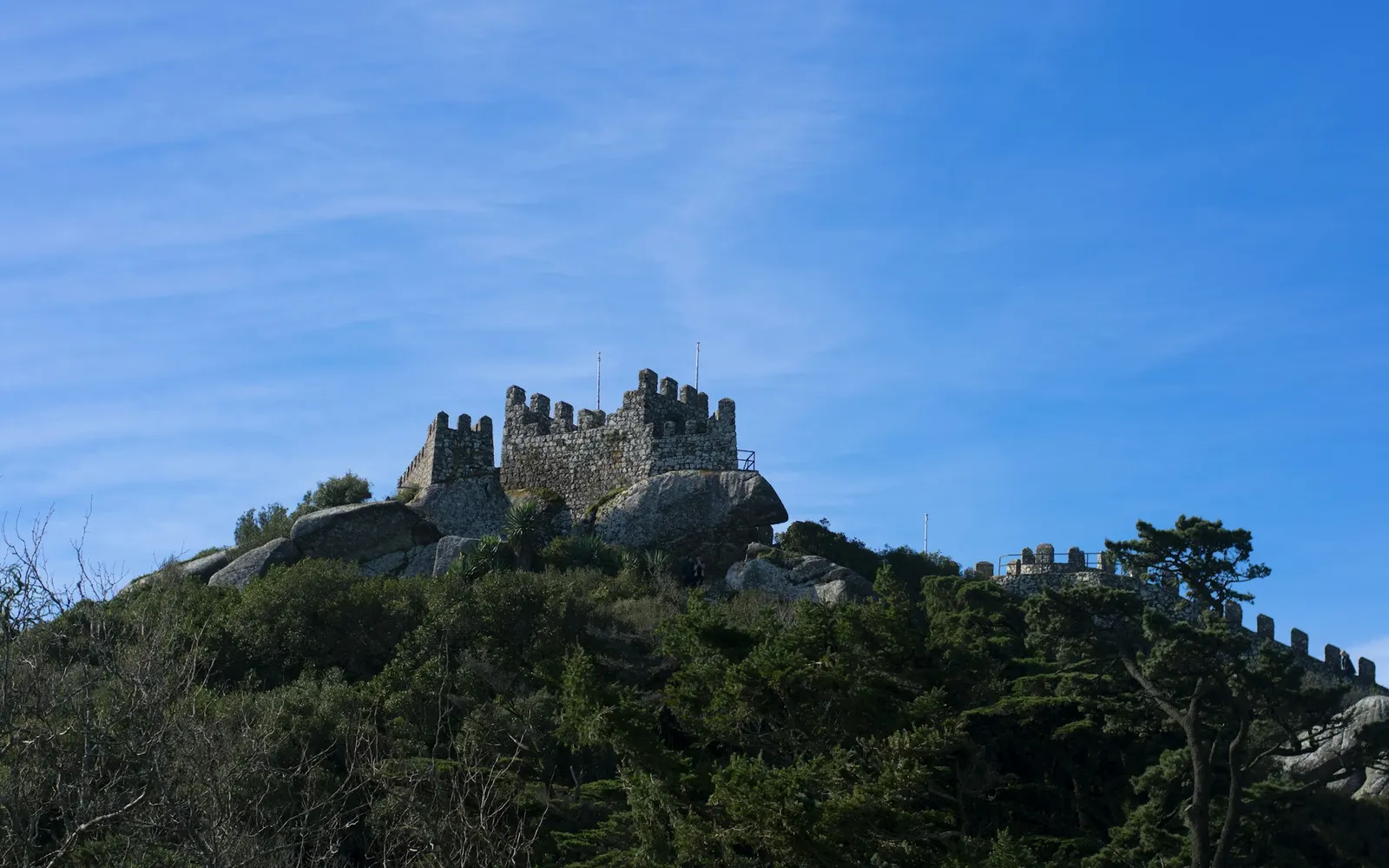
Late spring, from April to early June, and early autumn, from mid-September to October, are the most comfortable seasons at the Castle of the Moors: temperatures are mild, the Serra de Sintra is green, and the worst of the summer crowds and winter mist both sit off-peak. July and August bring heat to the exposed ramparts and the heaviest visitor numbers, so arrive at opening if these are your only options. From November to February the hilltop is quiet, but mist and rain are frequent and the panorama over Sintra town, Pena Palace and the Atlantic from the Royal Tower can vanish entirely on a poor day. The Moorish Castle sits high on a granite ridge fully exposed to Atlantic weather, so pack a windproof layer whatever the season and check the forecast before committing to the full rampart walk.
Is the Moorish Castle included on the same ticket as Pena Palace?
Pena Palace and the Moorish Castle are operated by the same company — Parques de Sintra-Monte da Lua (PSML) — and PSML offers a combined Pena + Moorish Castle ticket as well as a wider Sintra Card that bundles three or more PSML sites (typically Pena, Moorish Castle, National Palace of Sintra, Queluz, and Monserrate). Combined tickets carry a small discount over buying the entries separately. As a concierge we book whichever combination matches your day plan; you don't need to research the permutations yourself, just tell us which sites you want to see.
What time does the Moorish Castle open and close?
Opening hours are seasonal and set by PSML. The general pattern is 09:30 opening year-round, with closing around 18:30 in the high summer season (roughly late March to late October) and around 18:00 in the winter season. Last entry is one hour before closing, which is strictly enforced — staff at the lower gate will turn away visitors who arrive in the final hour. Hours can shift on public holidays, during weather closures, and for occasional operator maintenance days; we will confirm the exact hours for your booked date at the time we secure the ticket.
When is last entry?
Last entry is 60 minutes before the published closing time. Because the rampart walk takes 60–90 minutes to do properly, arriving in the final hour means you will not see the full circuit before the gate closes. We will not knowingly book an entry slot that gives you less than 90 minutes of usable visit time; if you ask us to book a late slot we will flag the time risk first.
Is the castle suitable for visitors with mobility issues?
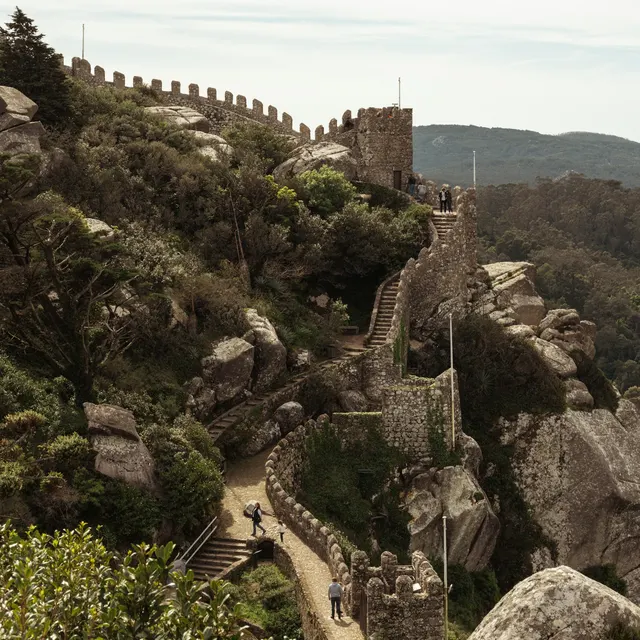
Honestly, no. The ramparts — which are the main attraction — involve multiple flights of uneven granite stairs without handrails, polished stone surfaces that are slick when wet, and sections of wall-top walkway with no inside railing. Wheelchairs and prams cannot access the wall-top route. The entrance area, the chapel of São Pedro de Canaferrim, and the interpretation centre are reachable on level paving and are a reasonable visit for a mobility-constrained companion in a group, but the castle as a whole is not a mobility-friendly site. If accessibility is a primary concern we usually steer visitors towards the Sintra National Palace and Pena instead.
Is the castle suitable for children?
Children aged roughly seven and upwards generally enjoy the ramparts — it is a real castle with real battlements and most kids find that immediately exciting. Children under six should be carried on the wall-top sections rather than allowed to walk them freely, because the parapet caps are below the height of a small child and the inside edge of the walkway often has no railing. PSML does not enforce a minimum age but parental supervision on the ramparts is essential. Strollers cannot be taken on the walls and there is no buggy park; if you are visiting with an infant, plan to carry them in a sling or front-pack.
Are dogs allowed?
PSML permits leashed dogs in the Moorish Castle grounds and in most of the surrounding Parque da Pena, but dogs are not allowed on the rampart wall-top walkway itself for the same safety reasons that apply to small children. Dogs are also not permitted inside the chapel or interpretation centre. Water bowls are not provided, so bring a collapsible bowl in summer. Heavy or anxious dogs are not a good fit for the site — the stairs and the exposure on the walls are demanding.
Is photography allowed? Can I bring a tripod or drone?
Handheld photography is allowed everywhere on the public route, including inside the chapel and at the top of the Royal Tower. Tripods are tolerated in principle but are awkward in practice — the Royal Tower platform is small and gets congested, and the rampart walkway is too narrow for a tripod without blocking other visitors. Staff may informally ask you to fold a tripod at peak times. Drones are prohibited across the entire PSML estate including the Moorish Castle, Pena, and the surrounding park; this is a hard rule, not a discretion-of-staff matter.
On the hill
What should I wear?
Layered clothing, closed-toe shoes with grip, and a light waterproof or windproof outer layer regardless of the Lisbon forecast. The castle sits at 450 metres and the Serra de Sintra is consistently 3–6°C cooler than Lisbon, with stronger wind on the exposed ramparts. In summer a long-sleeve layer over a t-shirt is usually enough; in winter a proper jacket is essential. Footwear matters more than most visitors expect — the granite stairs are polished smooth and slick when wet. Trainers, hiking shoes, or sturdy boots are all fine; smooth-soled fashion shoes, sandals without straps, and any kind of heel are not.
Are there water fountains, a café, or toilets?
There are public toilets near the entrance gate and a small café/kiosk in the same area selling drinks, snacks, and basic hot food. There are no facilities further into the castle once you start the rampart walk — bring a water bottle, especially in summer. Drinking fountains are not reliably available; the kiosk at the entrance sells bottled water. Visitors planning to combine the Moorish Castle with Pena should know that Pena's catering options are larger and arguably better; many visitors eat at Pena and snack at the Moorish Castle.
Can I picnic inside the castle?
Picnics are not permitted on the rampart walls or inside the archaeological zone, but the surrounding Parque da Pena (which you cross to reach the castle entrance) has designated picnic areas with benches and tables. PSML asks visitors to use the marked picnic zones rather than spreading out on archaeological surfaces or sensitive vegetation. Pack out everything you bring in — there are bins at the entrance area but not on the wall route.
What happens if it is raining or misty?
Light rain is fine — bring a waterproof and watch your footing on the polished stairs. Heavy rain makes the rampart walk genuinely dangerous and PSML staff may close the wall-top route on safety grounds; the lower areas (entrance, chapel, interpretation centre) usually stay open. Heavy mist (nevoeiro) does not close the site but reduces the Royal Tower view to a white wall. The mist often lifts by mid-to-late morning in summer; in winter it can persist all day. If your day is fully fogbound we recommend reversing the plan and doing lower-elevation sites (National Palace, Regaleira) first while you wait for the Serra to clear.
Can I walk up from Sintra town?
Yes — the Santa Maria trail leads from the historic centre of Sintra up to the Moorish Castle entrance in roughly 30–45 minutes and 200 metres of vertical climb, mostly on a cobbled and gravel path through woodland. It is a beautiful approach and avoids the bus 434 crowds in high season. Wear proper shoes and bring water. The walk is one-way uphill; most visitors take the trail up and bus 434 down. Visitors planning to walk up should know that the rampart walk on top of the trail is a substantial amount of stair-climbing in one day.
What is bus 434 and how does it work?
Bus 434 is the Scotturb circular hop-on service that runs Sintra train station → Sintra National Palace → Moorish Castle → Pena Palace → back to the station. It runs roughly every 15–20 minutes in high season and less often in winter. Tickets are bought on board (cash or contactless) and are valid for the whole loop on the same day — keep your receipt and you can re-board a later bus without paying again. In July and August the morning departures (09:30, 10:00) are usually full and standing-only; starting earlier helps.
Can I combine the Moorish Castle with Quinta da Regaleira?
Yes, but Regaleira is on the opposite side of Sintra town from the castle and the National Palace, so combining all three is a long day. A workable order is: morning Pena + Moorish Castle (via bus 434 from the station), descend by 434 or on foot to the town for lunch, then walk west 10 minutes from the National Palace to Quinta da Regaleira for a mid-afternoon visit. Skip the National Palace if energy is fading. Regaleira is operated by the Cultursintra Foundation, not PSML, so it has separate ticketing — we book it in parallel.
Is there an audio guide?
PSML provides interpretation panels in Portuguese, English, and several other languages at the main points of interest (the entrance, the chapel, the Royal Tower, the archaeological village). There is no formal audio guide for the Moorish Castle in the way there is for some other PSML sites. The interpretation centre near the chapel has a short video and a small museum display covering the site's history. Visitors who want a guided narrative usually engage a private tour guide for a full-day Sintra circuit rather than for the castle alone.
Is there shade on the ramparts in summer?
Very little. The rampart walkway is fully exposed to the sun for most of its length, the granite stone radiates heat back at you, and there is no shelter at the Royal Tower platform. In July and August the wall-tops can be uncomfortably hot between 12:00 and 16:00 even on a moderate day. Visitors planning a midsummer afternoon visit should bring a hat, sunscreen, and more water than they think they need. Early-morning and late-afternoon slots are noticeably more pleasant.
How does the concierge ticket service work?
You tell us which Sintra sites you want to see and on which date. We secure the appropriate PSML entries — Moorish Castle alone, Pena + Moorish Castle combined, or a wider Sintra Card — at the entry slot that fits your day. You receive the confirmed e-tickets by email before your visit, with the practical briefing (which gate, what to bring, weather notes) attached. On the day you go directly to the gate and present the QR code; there is no separate collection step. If your plans change before the visit we re-issue under operator rules; if the operator cancels for weather or maintenance you are covered under the Smart Visit Guarantee.
Can I bring a backpack or large bag?
Small day-packs are fine and there is no formal bag check at the entrance. Large suitcases, hiking packs, or bulky luggage are impractical on the narrow rampart walkway and should be left at your hotel or at the luggage lockers at Sintra train station. There is no left-luggage facility at the castle itself.